Tag: Human Rights

  • The Impact of Climate Change on Forced Migration in the Sahel: Human RightsPerspective (Nigeria as a Case Study)

    The Impact of Climate Change on Forced Migration in the Sahel: Human RightsPerspective (Nigeria as a Case Study)

    Noticing how climate change casts a shadow on Nigeria’s Sahel region, driving environmental degradation, disrupting livelihoods, and displacing communities, with grave consequences, leaving the most vulnerable in the society square up against human rights abuses in their search to escape their environmental misfortune, the authors saw imperative to study the phenomena.

    This narrative review examines the human rights dimensions of climate change–induced migration in Nigeria’s Sahel region, where environmental degradation, livelihood disruption, and displacement have intensified. Anchored in environmental migration theory, a human rights–based approach, intersectionality theory, and governance and policy theory, it explores the drivers, impacts, and potential solutions to this complex issue.

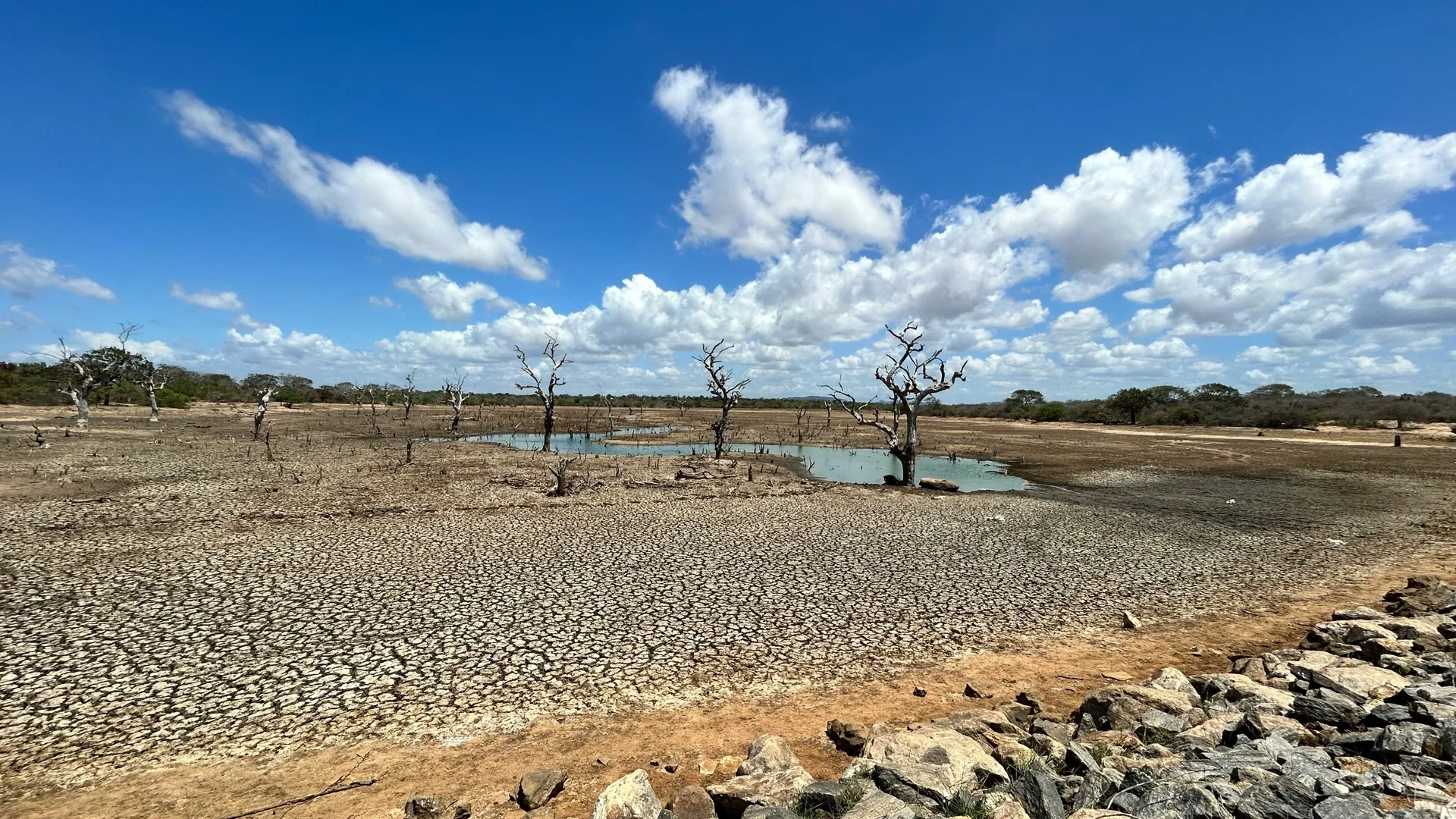
    Droughts, desertification, and erratic rainfall were identified as major environmental factors forcing communities to migrate. Climate change is shown to severely affect livelihoods and food security, raising serious human rights concerns related to access to food, water, health, and education, particularly for vulnerable groups.

    Study results emphasize the need for a comprehensive response that combines climate mitigation and adaptation, stronger legal protections for climate migrants, humanitarian assistance, and investment in sustainable development, and it is concluded that improved collaboration and policy action among stakeholders are essential to address root causes, protect human rights, and ensure that equity and inclusion guide all interventions.

    Learn more about this study here: https://doi.org/10.3968/13313


    Reference

    Nenger, Jerome A., Nancy U. Odimegwu and Casmir N. Nwankwo (2024), “The Impact of Climate Change on Forced Migration in the Sahel: Human Rights
    Perspective (Nigeria as a case study)”, Canadian Social Science
    Vol. 20, No. 1, 2024, pp. 23-31

  • Climate Change and Migration: Climate Change Induced Migration in International Law and the Human Right to a Sustainable Environment

    Climate Change and Migration: Climate Change Induced Migration in International Law and the Human Right to a Sustainable Environment

    As droughts, floods, sea-level rise, and other climate change induced phenomena are substantially threatening lives and livelihoods, forcing many to abandon their homes, despite the global dimension of these increasing phenomena, international legal instruments remain insufficient to deal with environmental migration, leaving those affected under insecure circumstances, and many unresolved issues.

    In an attempt at clarification on this complex problem, this paper discusses the difficulties surrounding climate-induced migration in international law and explains why the term “climate refugee” is not yet accurate or legally recognized. The case study of Ioane Teitiota v. New Zealand is used to show how these theoretical challenges affect individuals in practice.

    The paper concludes by exploring alternative approaches that move beyond existing legal frameworks, suggesting a shift toward integrating migration into climate adaptation strategies.

    It suggests that such efforts could be supported through adaptation funding and strengthened by emerging international legal developments, including the pending advisory opinion of the International Court of Justice on the human right to a clean, healthy, and sustainable environment.

    Learn more about this study here: https://doi.org/10.25365/vlr-2023-7-1-94


    Reference

    Karnicar, Carina (2023), “Climate Change and Migration
    Climate Change Induced Migration in International Law and the Human Right to a Sustainable Environment”, University of Vienna Law Review, Vol. 7 No. 1 (2023)

  • The Future is Now: Climate Displacement and Human Rights Obligations — A Note on Recent Developments in the UN Human Rights Committee

    The Future is Now: Climate Displacement and Human Rights Obligations — A Note on Recent Developments in the UN Human Rights Committee

    Although climate-related litigation has been a growing global concern, the author of this paper notices that climate mobility in itself has seldom been the subject of relevant case law.

    Only human rights bodies in particular have begun to make progress in legal developments in the sphere of climate mobility.

    In this paper, a 2022 determination by the UN Human Rights Committee is examined, which concerns the habitability of a small island setting – Australia’s Torres Strait Islands – under climate change conditions and the legal responsibilities of nation states to abide by their international human rights obligations in implementing timely adaptation measures, which could help to ensure continued habitation.

    Learn more about this paper here: https://doi.org/10.3389/fclim.2022.1061474


    Reference

    Thornton F (2022) The future is now: Climate displacement and human rights obligations—a note on recent developments in the UN Human Rights Committee. Front. Clim. 4:1061474

  • A Global Child Health Perspective on Climate Change, Migration and Human Rights

    A Global Child Health Perspective on Climate Change, Migration and Human Rights

    The growing impacts of anthropogenic climate change on human displacement and child health are vast, and the need for immediate collaborative action and policy change to reduce carbon emissions is imperative.

    Climate-related disasters and extreme weather events are already disrupting livelihoods, economies, population health, and human rights, creating large-scale migration and displacement crises with serious consequences for children.

    Displacement and migration, both within and across national borders, have significant physical and mental health effects on children, who are particularly vulnerable due to their developmental immaturity and dependence on others for safety and resources. Although they bear little responsibility for the climate crisis, children face some of its most severe consequences, raising concerns about social and intergenerational injustice.

    In this paper, the role of pediatric health care providers in caring for displaced children and advocating for those most at risk is emphasized.

    It offers a global perspective on climate change, including how its impacts reflect and reinforce colonial legacies, and provides practical action steps for clinicians in the United States and for those advocating for children’s health worldwide.

    Learn more about this paper here: https://doi.org/10.1016/j.cppeds.2021.101029


    Reference

    Uddin, R., Philipsborn, R., Smith, D., Mutic, A., & Thompson, L. M. (2021). A global child health perspective on climate change, migration and human rights. Climate Change and Children, 51(6), 101029

  • Migration and Dignity – Relocation and Adaptation in the Face of Climate Change Displacement in the Pacific – A Human Rights Perspective

    Migration and Dignity – Relocation and Adaptation in the Face of Climate Change Displacement in the Pacific – A Human Rights Perspective

    In this study, the threat of climate-induced displacement facing millions of people is looked into, with particular attention to Small Island States in the Pacific. Focusing on the case of Kiribati, it analyzes the shift from the government’s former Migration With Dignity (MWD) relocation strategy to a new approach centered on economic development, climate adaptation, and mitigation.

    Using a human rights perspective, it seeks to explore and contrast the potential and limitations of cross-border relocation with the current adaptation strategy, illustrated by an urban and land development project in Temaiku Bight on South Tarawa.

    It further considers alternative pathways, including expanded labor migration quotas and humanitarian visas.

    The study demonstrates that neither adaptation nor relocation alone offers a sufficient solution. Instead, a combination of strategies is needed to protect dignity and rights. It concludes by outlining key policy issues that must be addressed to ensure meaningful, rights-based migration options for the people of Kiribati in the years ahead.

    The author also argues that while adaptation and economic growth may take some time and regional cross-border relocations give no precedent for best practice, the best solution is a combination of options which cannot exist in isolation, summing up the numerous policy issues which must be addressed for there to be any hope of migration and dignity for the people of Kiribati in the years to come.

    Learn more about this study here: https://doi.org/10.1080/13642987.2021.1889515


    Reference

    Kupferberg, J. S. (2021). Migration and dignity – relocation and adaptation in the face of climate change displacement in the Pacific – a human rights perspective. The International Journal of Human Rights, 25(10), 1793–1818

  • Climate Change and Displacement: Protecting ‘Climate Refugees’ within a Framework of Justice and Human Rights

    Climate Change and Displacement: Protecting ‘Climate Refugees’ within a Framework of Justice and Human Rights

    In this paper, climate-induced migration is examined as a complex and far-reaching consequence of climate change, with forced displacement affecting millions worldwide.

    The author notices that although the link between climate change and migration was recognized as early as the first IPCC report in 1990, displacement was only formally included in climate policy frameworks decades later.

    A discussion is then presented on the scale and complexity of climate-related displacement, while paying particular attention to small island states and the climate–conflict–displacement nexus.
    It reviews the international legal framework for political refugees and highlights the legal gaps that leave climate migrants without adequate protection, alongside recent developments, such as the Global Compact on Migration and the Task Force on Climate Displacement.

    The author argues that while existing human rights law offers some protection, it is insufficient to meet the needs of climate migrants. Urgent international action is called for, to establish a dedicated legal regime, emphasizing that major greenhouse gas emitters have a responsibility to support displaced populations, especially those from small island states facing the loss of their homelands.

    Learn more about this paper here: https://doi.org/10.4337/jhre.2020.01.04


    Reference

    Atapattu, S. (2020). Climate change and displacement: protecting ‘climate refugees’ within a framework of justice and human rights. Journal of Human Rights and the Environment, 11(1), 86-113

  • Human Rights and Climate Displacement and Migration

    Human Rights and Climate Displacement and Migration

    Initiatives that offer opportunities to develop more effective, practical, and politically viable strategies for addressing climate-related migration are discussed in this article.

    It is emphasized how human rights law already provides robust protection for migrants moving under a wide range of circumstances, but climate change is expected to continue increasing both forced displacement and voluntary migration, within countries and across borders.

    Migration to urban areas or abroad can reduce pressure on households by easing resource constraints and generating remittances for those who remain behind.

    The author argues how the scale of future displacement will largely depend on government action to reduce carbon emissions, strengthen community resilience, mitigate climate risks, and adapt to the impacts of climate change.

    Learn more about this article here: https://www.taylorfrancis.com/chapters/edit/10.4324/9781315312576-8/human-rights-climate-displacement-migration-alice-thomas?context=ubx&refId=fd54b6b6-464b-4968-b43b-38b71c31bcb6


    Reference

    Thomas, Alice (2018), “Human rights and climate displacement and migration”,
    Routledge Handbook of Human Rights and Climate Governance, 2018 (1), Routledge

  • Climate Justice, Migration and Human Rights

    Climate Justice, Migration and Human Rights

    This article explains how a human rights – based, multi-stakeholder approach – incorporating corporate social responsibility – has emerged within the framework of climate justice.

    Climate justice is presented as a model that envisions international human rights standards implemented in accountable, transparent, and participatory ways. It notes the growing visibility and influence of global climate summits, court decisions, civil society organizations, and action networks in advancing this agenda.

    Beyond holding governments and corporations accountable, it explains how climate justice also provides a way to understand migration and human rights, and is also a way to conceptualise path dependencies assessing what climate change-affected migrants and other communities undergo in terms of human rights.

    Learn more about this article here: https://www.taylorfrancis.com/chapters/edit/10.4324/9781315622217-4/climate-justice-migration-human-rights-anja-mihr?context=ubx&refId=3124474b-677b-4881-88df-250c483f4986


    Reference

    Mihr, Anja (2017), “Climate justice, migration and human rights”, Climate Change, Migration and Human Rights, Routledge

  • Critical Perspective on the Identification of ‘Environmental Refugees’ as a Category of Human Rights Concern

    Critical Perspective on the Identification of ‘Environmental Refugees’ as a Category of Human Rights Concern

    In light of the phenomenon of climate change induced migration, this chapter offers a critical reflection not only on the insufficiencies of existing governance, but also of the flaws and weaknesses of reform proposals

    The author challenges the normative discourse surrounding the term “environmental refugee”, focusing on these main ideas: First, environmental migration cannot be governed by analogy with refugees. Second, there is no ethical justification for the protection of environmental migrants as such: solidarity-based arguments rather argue for the protection of migrants, whereas responsibility-based arguments call for a form of ‘climate justice’ for all those affected by climate change.

    Overall, the author urges a more critical and nuanced approach to environmental migration that moves beyond simplistic legal and moral frameworks.

    Learn more about this article here: https://www.taylorfrancis.com/chapters/edit/10.4324/9781315622217-3/critical-perspective-identification-environmental-refugees-category-human-rights-concern-beno%C3%AEt-mayer?context=ubx&refId=291640cd-eded-4e60-92ef-0d93f81aa363


    Reference

    Mayer, Benoît (2017), “Critical perspective on the identification of ‘environmental refugees’ as a category of human rights concern”, Climate Change, Migration and Human Rights, Routledge

  • The Human Rights of Climate-Induced Community Relocation

    The Human Rights of Climate-Induced Community Relocation

    In this paper, the case study of the relocation of Newtok – an Indigenous community in Alaska – as a response to climate change is analyzed, exploring human rights issues surrounding climate-induced planned relocations. Newtok is an example of a coastal community that faces forced relocation due to repeated extreme weather, erosion, and the loss of protective coastal barriers.

    The steps taken by federal, state, and tribal governments to support the relocation process are described. However, the absence of designated relocation funding means that agencies must rely on their own budgetary priorities to allocate resources.

    The efforts of Newtok’s tribal government and the Newtok Planning Group are presented here as a model for other communities confronting relocation as a long-term climate adaptation strategy.

    Learn more about this study here: https://www.taylorfrancis.com/chapters/edit/10.4324/9781315622217-9/human-rights-climate-induced-community-relocation-robin-bronen?context=ubx&refId=1e1dbd60-e8bc-46a9-959f-38dbb81629d4


    Reference

    Bronen, Robin (2017), “The human rights of climate-induced community relocation”, Climate Change, Migration and Human Rights, Routledge

  • State Responsibility to Prevent Climate Displacement

    State Responsibility to Prevent Climate Displacement

    In this article, the issue of climate displacement as one of the most significant humanitarian and human rights challenges of the twenty-first century is considered.

    It begins by outlining the global scale of the issue and the particular vulnerabilities faced by people displaced by climate-related hazards, and then proceeds to explore the normative foundations of state responsibility to prevent climate displacement and describes the measures governments can take to fulfill this obligation.

    It also emphasizes how poor and marginalized populations are disproportionately affected in all countries.

    Conclusions assess how climate displacement requires coordinated legislative, policy, and practical actions across disaster risk reduction, climate change adaptation, and development.

    Additionally, it explains how effective prevention must also build on international cooperation, supported by strong domestic legal and policy frameworks at national, regional, and global levels.

    Learn more about this article here: https://www.taylorfrancis.com/chapters/edit/10.4324/9781315622217-6/state-responsibility-prevent-climate-displacement-ezekiel-simperingham?context=ubx&refId=258f52a3-86b9-4521-b158-687f4dd3c292


    Reference

    Simperingham, Ezekiel (2017), “State responsibility to prevent climate displacement”,
    Climate Change, Migration and Human Rights, Routledge

  • Climate Change, Human Rights, and Social Justice

    Climate Change, Human Rights, and Social Justice

    The environmental and health consequences of climate change are explored in this paper, reiterating how they profoundly affect human rights and social justice, with disproportionate impacts on low-income countries and vulnerable populations within high-income countries.

    It is noticed how environmental changes such as rising temperatures, altered precipitation patterns, extreme weather events, and sea-level rise threaten agricultural production, access to safe water, and worker productivity, and are forcing many people to leave uninhabitable or uncultivatable land.

    Climate change also generates serious health impacts, including heat-related illness, vector-borne and waterborne diseases, respiratory disorders, malnutrition, mental health problems, and increased violence. Together, these environmental and health effects threaten civil, political, economic, social, and cultural rights, including the rights to life, health, food, water, shelter, security, and culture.

    The most vulnerable groups include poor and marginalized populations, women, children, older adults, people with disabilities, and those living in climate-affected regions. Globally, low-income countries—despite contributing least to greenhouse gas emissions—are disproportionately affected and have fewer resources to adapt.

    In conclusion, the authors hypothesize on how climate adaptation and mitigation strategies must be designed to protect human rights, promote social justice, and avoid deepening existing inequalities.

    Learn more about this article here: https://doi.org/10.1016/j.aogh.2015.08.008


    Reference

    Levy, B. S., & Patz, J. A. (2015). Climate Change, Human Rights, and Social Justice. Climate Change, Global Health and Human Rights, 81(3), 310–322